
Sci-fi manga ages strangely well. A story drawn in the 1980s about a city rebuilt after a blast still looks like tomorrow, and a series about collecting space junk from the early 2000s reads like next year's news. Manga artists get whole pages to build a future, and the good ones use every line of it.
Here are four sci-fi manga I think every manga reader should try, from a biker gang in Neo-Tokyo to a teenage genius rebuilding the world with chemistry. After each one there is a small tip for reading it on your iPhone or iPad with ComicFlow, the manga reader I build. It is $2.99 once, with an optional $6.99 one-time Pro unlock. None of the tips below need Pro.
Disclosure: I make ComicFlow at Applestan.

Quick Reference #
| # | Series | By | Kind of sci-fi | Volumes in Japan | Status | Best for |
|---|---|---|---|---|---|---|
| 1 | Akira | Katsuhiro Otomo | Cyberpunk, psychic powers | 6 | Completed (1990) | Huge, detailed action |
| 2 | Planetes | Makoto Yukimura | Hard sci-fi in orbit | 4 | Completed (2004) | A short, human space story |
| 3 | Land of the Lustrous | Haruko Ichikawa | Far-future, strange and beautiful | 13 | Completed (2024) | Art that looks like nothing else |
| 4 | Dr. Stone | Riichiro Inagaki, Boichi | Post-apocalyptic science adventure | 26, plus a 27th epilogue volume | Completed (2022) | Shonen fans, a long binge |
If you only try one, start with Planetes. It is short, it is finished, and it shows how quiet and personal sci-fi manga can be.
1. Akira #
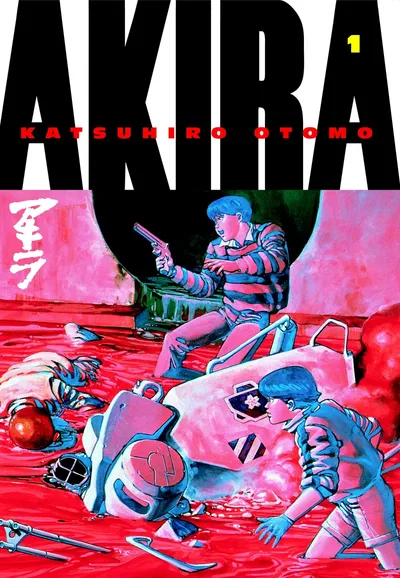
By: Katsuhiro Otomo | Volumes: 6 (completed, 1982 to 1990) | Genre: Cyberpunk / action
Decades after a huge explosion wiped out Tokyo, a new city called Neo-Tokyo stands next to the crater. Kaneda leads a teenage biker gang that races through the ruins at night. On one of those rides his childhood friend Tetsuo crashes into a strange child with powers, the army takes Tetsuo away, and he comes back changed. What follows pulls in the military, a group of rebels and a secret called Akira.
Akira ran in Kodansha's Young Magazine and became one of the first manga to be translated in full into English. It won the Kodansha Manga Award and several Eisner Awards, and Otomo directed the 1988 anime film himself. The film tells a much shorter version, so even if you know it, the manga has a lot more to show you. Kodansha USA publishes it in English in six big volumes.
Why it feels like the future: Otomo draws every window, cable and piece of rubble in Neo-Tokyo, and then he blows it all up across two pages.
How to read it: Akira is full of two-page spreads, and this is where an iPad shines. In ComicFlow, Page Layout is set to Auto, so when the screen is wide enough you get two pages side by side, like the printed book. If the spreads look one page off, tap the gear for Reader Settings and switch on Show Cover Alone, which lines the pairs up the way they were printed. On an iPhone in single-page mode, the same section has Split Wide Pages, which shows a wide scanned spread as two halves. On any device, double-tap a page to zoom in on the spot you tapped, or pinch for more.
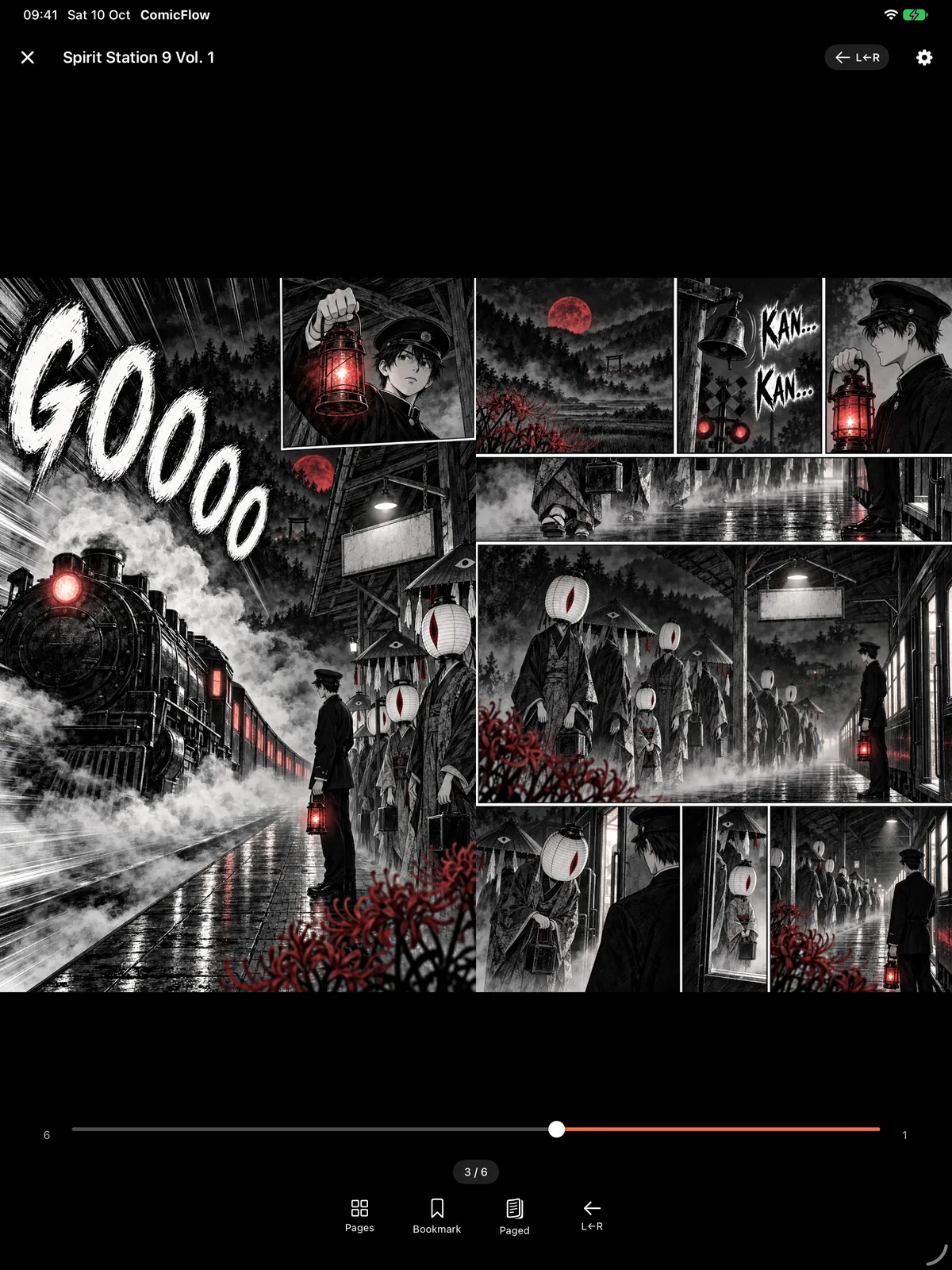
Two pages side by side on iPad, in right-to-left mode.
2. Planetes #
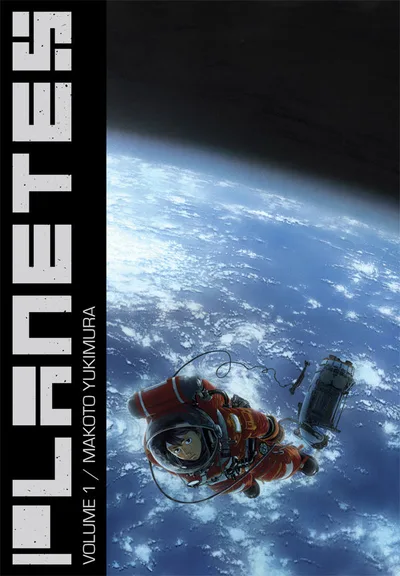
By: Makoto Yukimura | Volumes: 4 in Japan (completed, 1999 to 2004) | Genre: Hard sci-fi / drama
In the 2070s, people live and work in space, and orbit is full of junk. Every loose bolt and dead satellite is a danger to ships and stations, so someone has to collect it. Planetes follows one of those crews: Hachimaki, who dreams of owning a ship and flying into deep space, Yuri, who lost his wife in an accident caused by debris, and Fee, the pilot, who mostly wants a quiet place to smoke.
This is Makoto Yukimura's first series, made years before Vinland Saga. It ran in Kodansha's Morning magazine, and both the manga and the Sunrise anime from 2003 won the Seiun Award, Japan's big prize for science fiction. Dark Horse publishes it in English in two omnibus volumes with the color pages included.
Why it feels like the future: nothing in it is magic. It is jobs, money, loneliness and physics, and that makes space feel close.
How to read it: lots of Planetes happens against the black of space, and many scans and omnibus files come with wide white borders around each page. Open Reader Settings and switch on Trim Margins in the Display section. ComicFlow then crops white or black borders off each page in paged mode, so the art fills more of your iPhone screen. Your files stay as they are. With four volumes in Japan, it also fits in one evening and a lazy Sunday. Remove white borders from manga on iPhone has more on Trim Margins.
3. Land of the Lustrous #
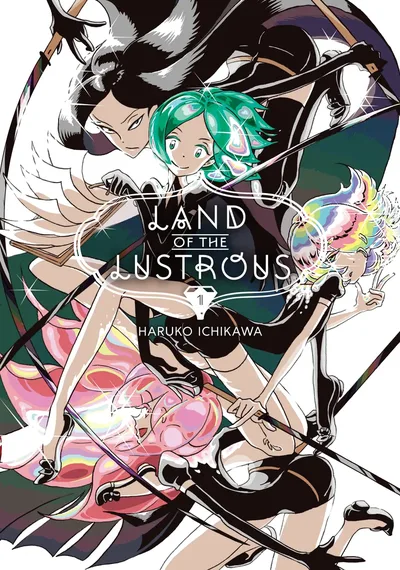
By: Haruko Ichikawa | Volumes: 13 in Japan (completed, 2012 to 2024) | Genre: Far-future sci-fi / fantasy
Far in the future, after six meteors hit the Earth, almost all life is gone. What is left is a single coast, and on it live the Lustrous: immortal beings made of gemstone. People from the moon come down every few days to hunt them and carve them into jewelry. Phosphophyllite, called Phos, is one of the weakest gems and too brittle to fight, so they are given a job nobody wants: writing an encyclopedia of the world. That small job turns into something much bigger.
Land of the Lustrous ran in Kodansha's Afternoon magazine for more than eleven years. It starts out light and funny, and slowly becomes one of the strangest and saddest stories in manga. Kodansha USA publishes it in English, and the studio Orange made a CG anime of the first part in 2017.
Why it feels like the future: it is so far ahead that humans are only a rumor, and Ichikawa draws that world with thin, clean lines and a lot of empty space.
How to read it: Ichikawa's pages are bright and airy, and a black frame around them can feel heavy. In Reader Settings, the Background section has four colors: Black, Dark Gray, Gray and White. Try White for this series, so the page and the screen around it blend into one. Set Reading Direction to Right to Left (Manga) once, and if your files carry the series name, ComicFlow remembers it for every book in the series.
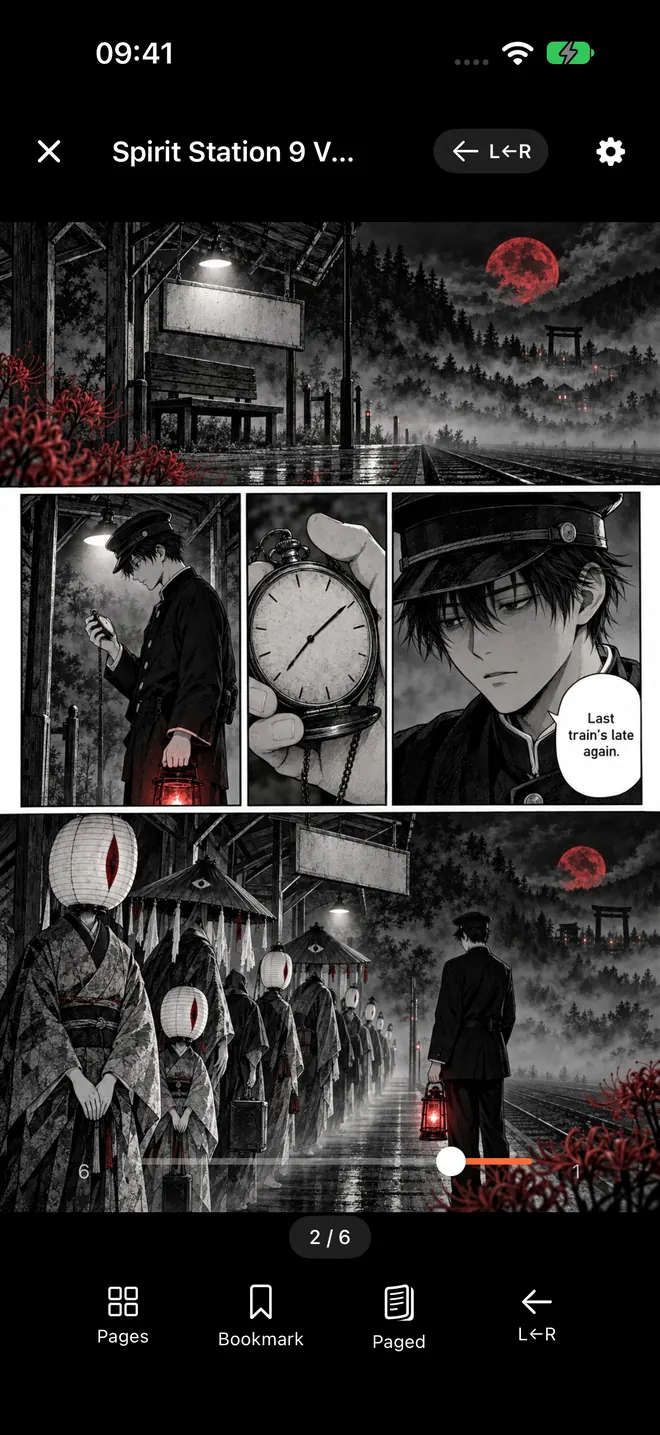
Right-to-left mode on iPhone. The gear at the top right opens Reader Settings, where Background Color and Reading Direction live.
4. Dr. Stone #
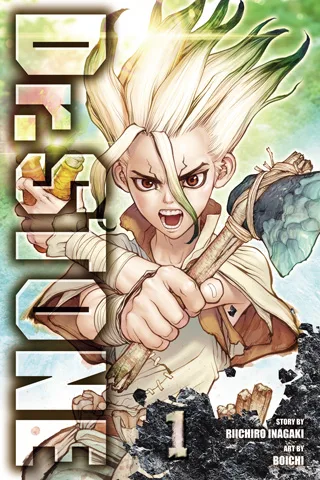
By: Riichiro Inagaki (story), Boichi (art) | Volumes: 26 in Japan, plus a 27th with epilogue chapters (completed, 2017 to 2022) | Genre: Science adventure / shonen
One day a green flash turns every human on Earth to stone. Thousands of years later, a high school student named Senku Ishigami breaks free. Cities are gone and forest covers everything, but Senku has his brain and a plan: rebuild civilization from zero with science, one invention at a time. Soap, iron, glass, medicine and, eventually, much bigger things.
Dr. Stone ran in Weekly Shonen Jump and won the Shogakukan Manga Award in the shonen category in 2019. It has the speed and the rivals of a battle manga, but most fights are won in a lab. VIZ Media publishes it in English, and the TMS anime finished its fourth and final season in 2026.
Why it feels like the future: it is about how we got the modern world in the first place, rebuilt step by step in front of you.
How to read it: this is a long binge, and some pages are worth coming back to, like the one where Senku explains how he makes something. Tap Bookmark in the reader's bottom bar to save the page you are on, and the Bookmarks list takes you back to it later. When you put your phone down, the Continue Reading card at the top of the library shows the book and page you stopped on. If you read on both an iPhone and an iPad, turn on iCloud Sync in Settings so your reading progress and bookmarks follow you, as long as the same book is on both. If the series comes as one ZIP or RAR, ComicFlow imports it and adds each volume as its own book.
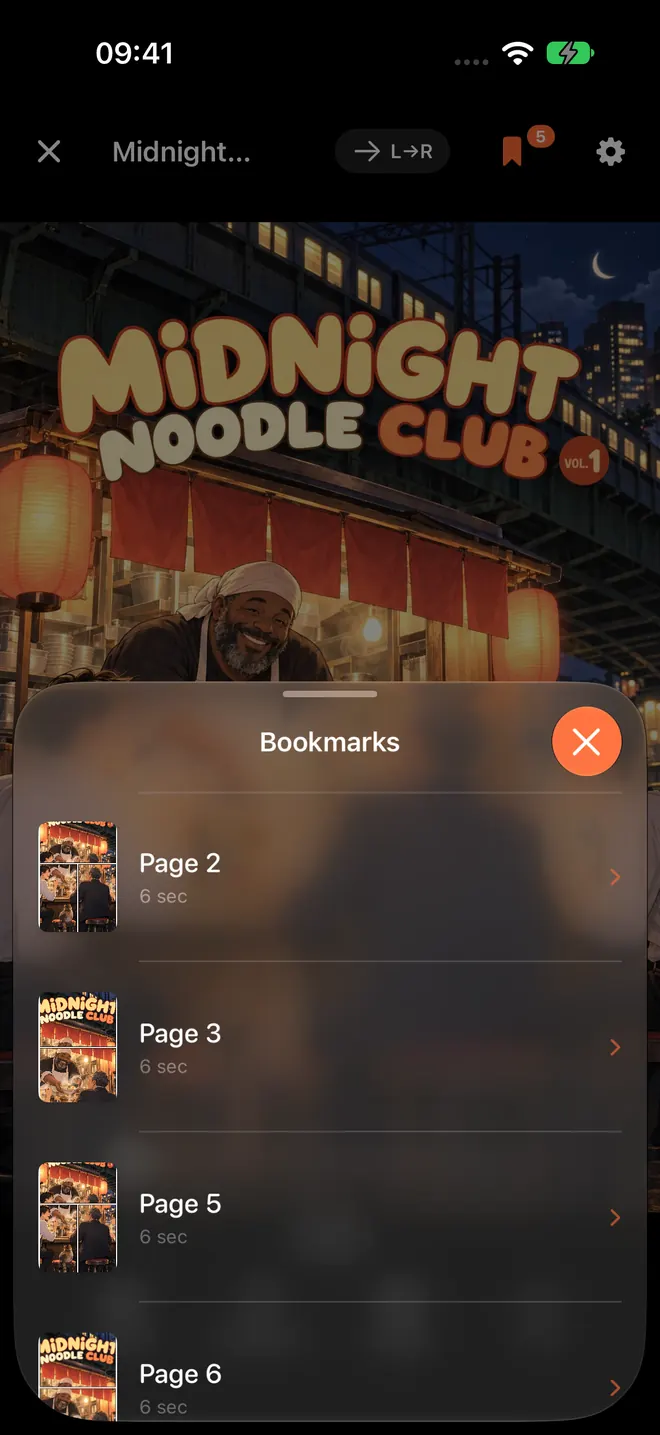
The Bookmarks list in the reader. Tap a page to jump back to it.
Getting these series as files you can read #
ComicFlow reads files you own: CBZ, CBR, ZIP, RAR and PDF. It does not open EPUB, and books bought inside store apps such as Kindle or BookWalker stay in those apps. Two routes work:
- Buy DRM-free where you can. Where to buy DRM-free manga lists the stores I could confirm and what format they sell.
- Scan volumes you already own. How to scan manga you own covers it.
To get the files onto your iPhone or iPad, Wi-Fi Upload lets you drag them onto a page in any browser on your computer. Once a book is in ComicFlow's library it opens with no connection at all.
What is included without Pro #
Every tip in this post is in the $2.99 app: two-page spreads on iPad, Show Cover Alone, Split Wide Pages, double-tap zoom, Trim Margins, the four background colors, right-to-left reading saved per series, page bookmarks, the Continue Reading card, iCloud Sync and Wi-Fi Upload. Page curl is in there too. There are no ads or ad tracking.
ComicFlow Pro is an optional $6.99 one-time unlock, not a subscription. It adds Face ID-locked collections, Komga, Kavita and OPDS server libraries, saved reader presets and EPUB export for Kobo, Boox, reMarkable and PocketBook e-readers.
Related reading #
- 4 fantasy manga worth getting lost in: for when you want magic instead of machines
- The best device for reading manga: iPhone, iPad or something else
- Bookmark manga pages on iPhone: save the pages you want to find again
- Import a whole manga series from one ZIP or RAR: every volume as its own book
- 4 mystery manga that keep you guessing: Monster, Death Note and more
ComicFlow sends anonymous usage analytics to help improve the app, and you can switch that off in Settings, then Privacy, then Share Usage Data. Your manga files stay on your device. The privacy policy has the full list.
Frequently asked questions
What are the best sci-fi manga to start with?
Four good places to start are Akira by Katsuhiro Otomo (6 volumes, finished), Planetes by Makoto Yukimura (4 volumes, finished), Land of the Lustrous by Haruko Ichikawa (13 volumes, finished) and Dr. Stone by Riichiro Inagaki and Boichi (26 volumes plus a 27th epilogue volume, finished). In English, Akira and Land of the Lustrous are published by Kodansha USA, Planetes by Dark Horse and Dr. Stone by VIZ Media.
Which sci-fi manga is the shortest?
Planetes. Makoto Yukimura's story about a crew that collects space junk in orbit fills four volumes in Japan, and Dark Horse collects it in English in two omnibus volumes. It is a good weekend read.
Is there a sci-fi manga for readers who usually read shonen?
Dr. Stone. It ran in Weekly Shonen Jump from 2017 to 2022 and won the Shogakukan Manga Award in the shonen category. It has the energy of a battle manga, but most fights are won with chemistry and engineering.
How do I read two-page spreads in manga on iPhone or iPad?
In ComicFlow, Page Layout is set to Auto by default, so an iPad shows two pages side by side when the screen is wide enough. Show Cover Alone keeps printed spreads lined up. On an iPhone in single-page mode, Split Wide Pages shows a wide spread as two halves. Double-tap any page to zoom in on the spot you tapped.
Do I need a subscription to read manga with ComicFlow?
No. ComicFlow costs $2.99 once, with no subscription and no ads, and it runs on iPhone and iPad. Right-to-left reading, two-page spreads, Trim Margins, page bookmarks and the Continue Reading card are all included. An optional $6.99 one-time Pro unlock adds comic server libraries, reader presets, Face ID-locked collections and EPUB export for e-readers.