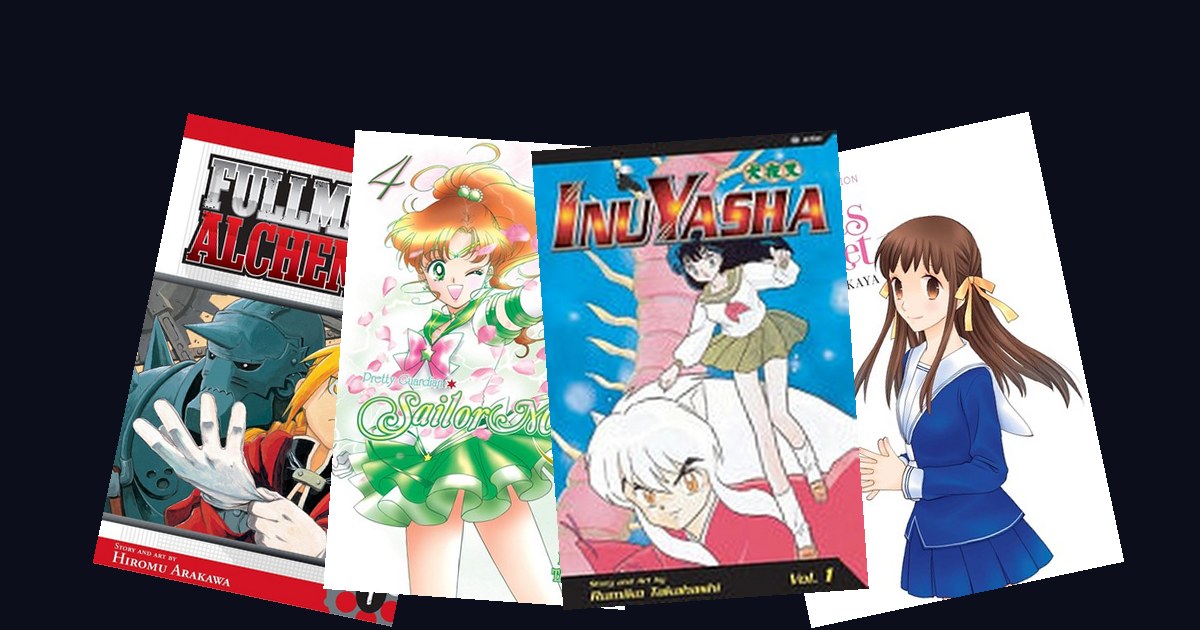
The most-read manga of the last forty years were almost all written by men. The most genre-defining ones often weren't. The four women on this list each created a series that didn't just succeed commercially but rewrote the rules of an entire genre, and in three of four cases, the genre they reshaped is still operating on conventions they invented.
This isn't a celebratory list. It's a structural one. Magical girls, comedic supernatural romance, modern shonen drama, and the entire trauma-and-healing register of contemporary character-driven manga all owe specific, traceable debts to these four mangaka. Reading their work isn't optional cultural homework. It's reading the actual source code of large parts of the medium.
All four of these series are completed and available digitally. ComicFlow reads CBR, CBZ, RAR, ZIP, and PDF and tracks progress on every volume independently, practical when you're working through 56 volumes of Inuyasha.

Quick Reference #
| # | Mangaka | Defining Series | Genre Created or Defined | Status |
|---|---|---|---|---|
| 1 | Hiromu Arakawa | Fullmetal Alchemist | Modern character-driven shonen | Completed |
| 2 | Naoko Takeuchi | Sailor Moon | The magical girl genre | Completed |
| 3 | Rumiko Takahashi | Inuyasha (and others) | Supernatural romantic comedy | Completed |
| 4 | Natsuki Takaya | Fruits Basket | Trauma-and-healing shojo | Completed |
Read in any order. Sailor Moon and Fruits Basket are the most accessible starting points; Fullmetal Alchemist is the most narratively complete; Inuyasha is the longest commitment.
1. Hiromu Arakawa: Fullmetal Alchemist #
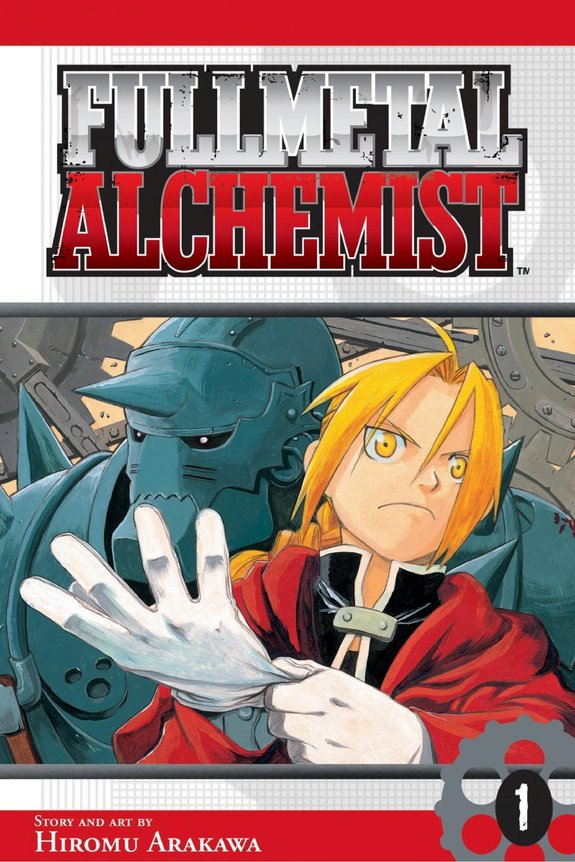
By: Hiromu Arakawa | Chapters: 108 (27 volumes, completed) | Genre: Shonen / fantasy / drama
Two brothers attempt the alchemical taboo of bringing their dead mother back to life. The ritual fails. One loses an arm and a leg, the other loses his entire body and is bound to a suit of armor, and the manga follows their search for the Philosopher's Stone, the only object capable of reversing what they did. What looks like a quest narrative becomes one of the most tightly plotted long-form stories ever published in the medium.
Hiromu Arakawa is on this list because Fullmetal Alchemist quietly redefined what shonen could be. Before FMA, the genre was largely tournament arcs and escalating power levels; after FMA, mainstream shonen had to take character work, thematic weight, and structural payoff seriously. Series as different as Hunter x Hunter's later arcs, My Hero Academia, and Jujutsu Kaisen all operate inside a frame Arakawa helped establish, that a 100+ chapter shonen could land its ending, that every supporting character could matter, and that the genre could carry the weight of real moral arguments without breaking. The 80 million copies sold are not the achievement. The achievement is what mainstream shonen has been allowed to attempt ever since.
2. Naoko Takeuchi: Sailor Moon #
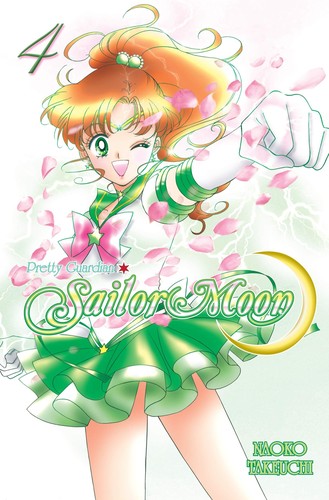
By: Naoko Takeuchi | Chapters: 60 (18 volumes / 12 reissue volumes, completed) | Genre: Shojo / magical girl / fantasy
A clumsy middle schooler named Usagi Tsukino discovers she is the reincarnation of a moon princess and joins a team of fellow Sailor Guardians to protect the Earth from forces that have been hunting her across previous lives. The story is romantic, cosmic, occasionally devastating, and structurally familiar to anyone who has watched literally any magical girl anime made since 1992, because Sailor Moon is where the modern conventions of the genre were assembled.
Naoko Takeuchi did not invent magical girls in the abstract; works like Cutie Honey and Magical Girl Lalabel predate her. What Sailor Moon invented was the modern grammar of the genre, the team of color-coded heroines, the transformation sequences, the love interest from a past life, the seasonal villain structure, the balance of slice-of-life schoolgirl content with cosmic stakes. Almost every magical girl series since (Cardcaptor Sakura, Pretty Cure, Madoka Magica) is operating inside or against templates Sailor Moon defined. The manga is also significantly darker than the 1990s anime fans remember. The Stars arc, in particular, contains some of the most striking endings in shojo.
3. Rumiko Takahashi: Inuyasha #
By: Rumiko Takahashi | Chapters: 558 (56 volumes, completed) | Genre: Shonen / supernatural / romantic comedy
A modern high school girl named Kagome falls down a well and emerges in feudal Japan, where she meets a half-demon named Inuyasha and gets pulled into a quest to recover the shattered fragments of a sacred jewel. Demons, time travel, romance, and a sprawling supporting cast follow over 558 chapters. Rumiko Takahashi is the most-published female mangaka in history, and Inuyasha is the most internationally recognizable of her major works, but it is part of a body of output (Urusei Yatsura, Maison Ikkoku, Ranma ½) that genuinely did define an entire mode of manga.
Takahashi essentially invented the supernatural-comedy-romance template that dominated late-20th-century manga and anime. Series like Tenchi Muyo, Kanon, Ah! My Goddess, and dozens of others are working from a Takahashi blueprint, the ordinary protagonist pulled into a fantastical romance, the comedic ensemble, the slow-burn central relationship sustained over hundreds of chapters. She is also one of the few mangaka of her generation whose serialized work routinely cleared 50+ volumes per series. Inuyasha is the friendliest entry point into her catalogue, and finishing it is the closest thing to a complete tour of her style on offer.
4. Natsuki Takaya: Fruits Basket #
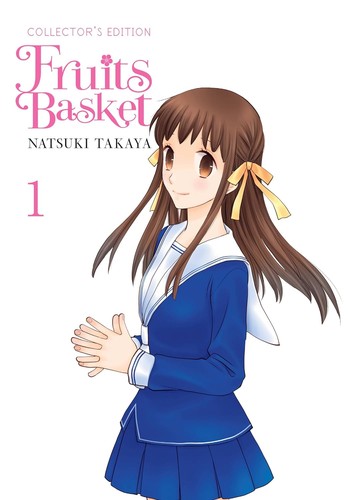
By: Natsuki Takaya | Chapters: 136 (23 volumes, completed) | Genre: Shojo / drama / supernatural / romance
A homeless high school girl named Tohru ends up living with the Soma family, where each member is cursed to transform into an animal of the Chinese zodiac when hugged by the opposite sex. The premise sounds like a romantic comedy. The first few volumes lean into that. Then, very slowly, Natsuki Takaya pulls back the curtain on what the curse has actually done to the people living under it, and the manga becomes one of the most affecting studies of generational trauma ever drawn.
Takaya is on this list because Fruits Basket cracked open a register most shojo of its era didn't permit itself. Childhood abuse, parental neglect, internalized self-loathing, the slow work of recovery. Furuba spends 136 chapters showing what it actually takes to heal from things that cannot be undone. Almost every modern shojo and josei series that takes mental health seriously (Orange, A Silent Voice's quieter beats, much of Ai Yazawa's later work) is operating in space Takaya helped open. The 2019-2021 anime reboot brought a new generation to the series, but the manga's slower pacing is where the emotional weight builds. By volume 20, you'll understand why this is the series people refuse to stop recommending two decades after it ended.
How to Read All Four #
The combined run is roughly 860 chapters of essential reading. Inuyasha alone is 56 volumes; Sailor Moon is shorter but its 12-volume reissue is the definitive edition; Fullmetal Alchemist and Fruits Basket are each around 25 volumes. ComicFlow's progress tracking keeps every series organized independently, useful when you're rotating between four mangaka with very different paces.
A few practical tips:
- Start with FMA or Fruits Basket if you want a complete read fast. Both clear in a few weeks and end definitively.
- Read Sailor Moon in the 12-volume reissue. It's the cleaner version with restored art and the original Takeuchi text.
- Read Inuyasha in arcs, not chapters. Like One Piece, it rewards a saga-by-saga approach over chapter counting.
- Don't skip the slower volumes of Fruits Basket. The early lighthearted chapters set up payoffs that don't land for another 15 volumes.
ComicFlow handles all four formats these series ship in, older tankobon scans (CBR/CBZ), official Kodansha and VIZ digital releases (PDF), and the modern reissue editions, without needing different apps for each.
Related Articles #
- 4 Manga Guaranteed to Make You Cry. Includes Fruits Basket and other emotional reads in the same register
- 4 Manga to Read Before You Die. The wider bucket list FMA appears on
- Best Manga for Beginners: 15 Series to Start With. Friendly entry points across genres
- How to Build a Manga Library on iPhone (2026). Setting up a long-term reading workflow
- How to Read Manga Right-to-Left on iPhone. Reading direction settings for traditional manga