First-tattoo nerves are completely normal. Your palms are sweaty, you've read a dozen Reddit threads, and you're second-guessing everything from the design to the placement. That anxious feeling? Almost every tattooed person had it before their first session. It doesn't mean you're not ready.
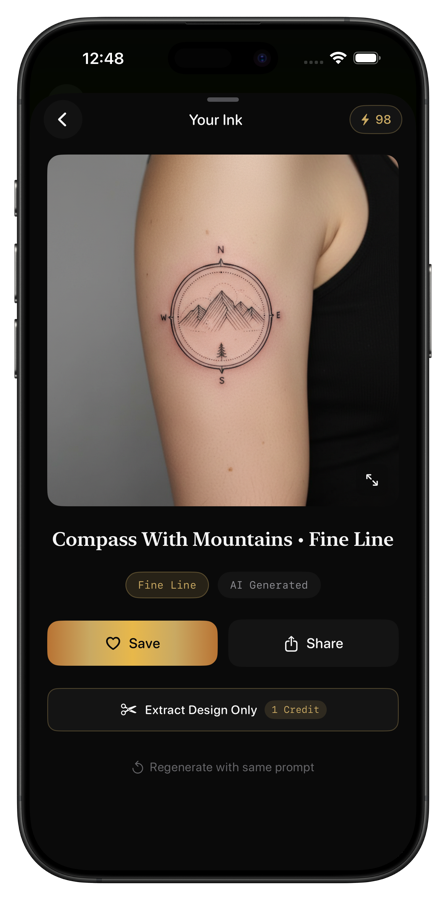
The best thing you can do is show up prepared. Know what to expect, how to take care of your skin afterward, and what mistakes to avoid. And if you're still finalizing your design, Negink lets you generate custom AI tattoo designs in 10 authentic styles and preview them on your body before you commit to anything permanent.

Preparing Before Your Appointment
Preparation starts the day before, not when you walk through the door. A few simple steps make a noticeable difference in how the session goes.
Eat a real meal. This is the most underrated first-tattoo tip. Your body needs fuel to handle the stress response from tattooing. Eat a solid meal 1-2 hours before your appointment. Something with protein and complex carbs works best. Showing up on an empty stomach is a fast track to feeling lightheaded or nauseous.
Hydrate. Drink plenty of water the day before and the morning of your appointment. Well-hydrated skin takes ink better, and your artist will thank you for it. Skip the alcohol the night before, too. It thins your blood and increases bleeding, which makes the tattoo harder to apply cleanly.
Wear the right clothes. Think about where your tattoo is going and dress accordingly. Getting a forearm tattoo? Wear a short-sleeve shirt or something easy to roll up. Ribcage piece? A loose top that lifts easily. You'll be sitting or lying in one position for a while, so comfort matters more than style.
Finalize your design. Don't walk in hoping to figure it out on the spot. Your artist set aside time based on what you discussed during consultation. Last-minute redesigns eat into your session and add stress for everyone. If you're still exploring ideas, spend time with your references beforehand.
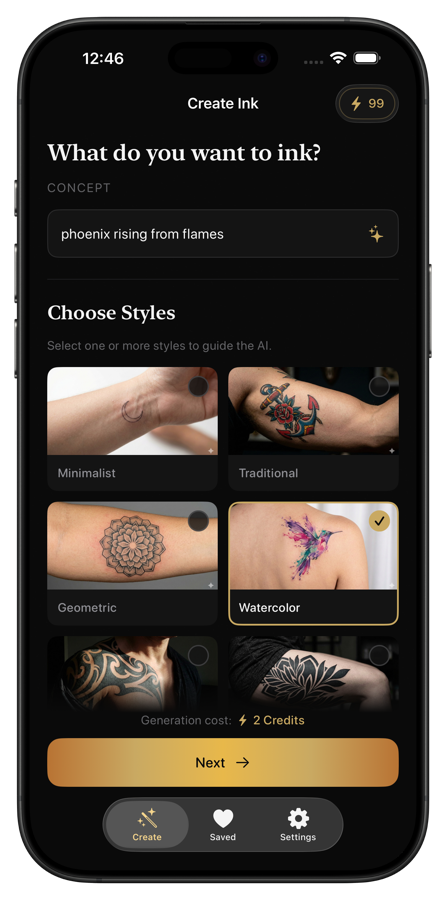
Apps like Negink are useful here. You can generate dozens of design variations and preview them on your body, so you walk into the shop already confident in your direction.
Skip the caffeine. Coffee and energy drinks increase sensitivity and can make you jittery. If you're a morning coffee person, consider having half your usual amount or switching to tea.
Arriving at the Shop
Here's what actually happens when you walk in for your first appointment.
Paperwork first. You'll fill out a consent form and possibly a health questionnaire. This covers allergies, medications, skin conditions, and medical history. Some shops ask about pregnancy and blood-thinning medications. It's standard procedure, not a red flag.
The stencil. Your artist will have prepared a stencil (a purple/blue transfer) based on the design you agreed on. They'll clean the area, shave any hair (even peach fuzz), and apply the stencil to your skin. This is your last chance to adjust placement, size, and orientation.
Take the stencil seriously. Stand in front of a mirror. Move around. Flex the muscle. Look at it from different angles. If something feels off, say so now. A good artist would rather reposition a stencil three times than tattoo something in the wrong spot. Don't feel awkward about asking for adjustments. This is your body and your money.
Last-minute changes are okay, within reason. Small tweaks to the stencil position, a slight size adjustment, or minor design edits are fine. Asking to completely redesign the piece 10 minutes before needles touch skin is not. That conversation should have happened during consultation.
The Tattooing Process
The part everyone wants to know about: what does it actually feel like?
The first line. Most people describe the initial sensation as a sharp, hot scratching feeling. It's not the deep, unbearable pain you might be imagining. The first 30 seconds are the worst because your body hasn't adjusted yet. After that, endorphins kick in and the pain typically settles to a manageable level.
Pain varies by location. Fleshy areas with more muscle (upper arm, outer thigh, calf) are the most tolerable. Bony areas and thin skin (ribs, spine, feet, inner wrist, elbow ditch) hurt significantly more. For a first tattoo, most artists recommend sticking to less painful areas.
Here's a rough pain scale:
- Low pain: Outer upper arm, outer thigh, calf, upper back
- Moderate pain: Inner forearm, shoulder, lower back, outer wrist
- Higher pain: Ribs, spine, sternum, feet, hands, inner elbow, kneecap
Session length depends on the piece. A small, simple design might take 30-60 minutes. A medium piece with shading could run 2-3 hours. Larger work might require multiple sessions. Your artist should give you a time estimate beforehand.
Lining versus shading feel different. Outlining uses a single needle grouping and feels sharper and more precise. Shading uses wider needle configurations and feels more like a burning, scratchy sensation spread across a larger area. Some people find shading easier to tolerate; others find the opposite.
During the Session
You're in the chair, the needle is buzzing, and now you need to get through it. Here's how.
Breathe steadily. Slow, deep breaths help regulate your nervous system. Holding your breath tenses your muscles, which makes the pain worse and makes it harder for your artist to work on stable skin. Find a rhythm: breathe in for four counts, out for four counts.
Stay still. This sounds obvious, but the instinct to flinch is real. Your artist needs you to hold your position. If you need to move, sneeze, or cough, tell them first so they can lift the needle.
Breaks are normal. You can ask for a break at any time. A five-minute pause to stretch, drink water, eat a snack, or just breathe is perfectly fine. No experienced artist will judge you for it. In longer sessions, your artist will likely suggest breaks themselves.
Bring distractions. Headphones and a podcast or playlist help a lot. Some people watch shows on their phone. Chatting with your artist works too, if they're the talkative type. Anything that keeps your mind off the sensation.
Communicate. If the pain is becoming too much, speak up. If your position is uncomfortable, say something. If you feel dizzy or nauseous, tell your artist immediately. They'll stop, get you water, and make sure you're okay. Fainting in the chair is rare, but it happens, usually because someone skipped eating.
Aftercare: The First 48 Hours
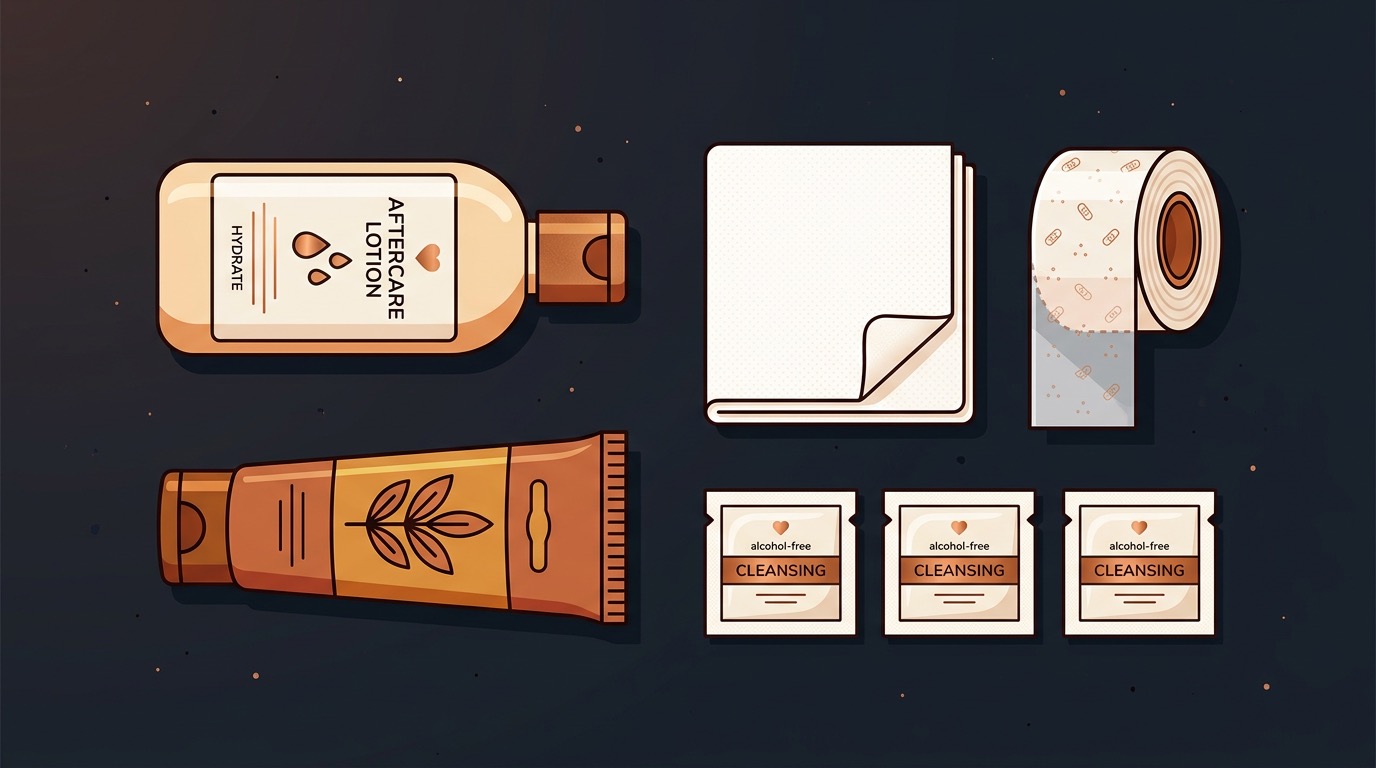
Your tattoo is technically an open wound. How you treat it in the first few days has a direct impact on how it heals and how it looks long-term.
Leave the wrap on. Your artist will cover the fresh tattoo with either plastic wrap or a medical-grade adhesive bandage (like Saniderm or Tegaderm). Follow their specific instructions on when to remove it. Plastic wrap usually comes off after 2-4 hours. Adhesive bandages can stay on for 24-72 hours.
First wash. When you remove the wrap, gently wash the tattoo with lukewarm water and a fragrance-free, gentle soap. Use your fingertips, not a washcloth. You'll notice a slimy layer of plasma and excess ink. That's normal. Pat dry with a clean paper towel. Don't rub.
Moisturize lightly. Apply a thin layer of unscented moisturizer or a tattoo-specific aftercare product. Thin is the key word. Slathering on a thick layer traps moisture and can cause breakouts or slow healing. Your artist will recommend a product. Common choices include Aquaphor (for the first few days) and an unscented lotion like Lubriderm or Cerave after that.
Don't touch it. Your hands carry bacteria. Avoid touching the tattoo unless you've just washed your hands. And never let other people touch it, no matter how excited they are to see it up close.
Aftercare: The First Two Weeks
The first 48 hours are the most critical, but healing takes 2-4 weeks total.
Expect peeling and itching. Around days 3-7, your tattoo will start to peel. It looks alarming, like a sunburn flaking off. This is completely normal. The peeling skin may carry some color with it. Don't panic, and absolutely do not pick at it. Picking can pull ink out and leave patchy spots.
The itch is real. As the tattoo heals, it will itch. Sometimes intensely. Do not scratch it. Slapping the area lightly can help. Applying a thin layer of moisturizer also reduces the urge. The itching phase typically lasts 1-2 weeks.
Avoid these things:
- Submerging the tattoo in water (no baths, pools, hot tubs, or ocean swimming for at least 2 weeks)
- Direct sunlight on the fresh tattoo
- Tight clothing that rubs against it
- Gym workouts that cause excessive sweating on the tattooed area (light exercise is usually fine after a day or two)
- Picking, scratching, or peeling the flaking skin
Wash 2-3 times daily. Continue gently washing and moisturizing until the tattoo has fully healed. The surface will look healed after about 2 weeks, but the deeper layers of skin take 4-6 weeks to fully recover.
Long-Term Tattoo Care
Once your tattoo is healed, keeping it looking sharp for years comes down to a few habits.
Sunscreen is non-negotiable. UV exposure is the single biggest factor in tattoo fading. Apply SPF 30+ sunscreen to your tattoo whenever it's exposed to sunlight. This applies year-round, not just summer. Color tattoos fade faster than black, but all tattoos benefit from sun protection.
Keep your skin moisturized. Healthy, hydrated skin shows tattoos better. A basic daily moisturizer is enough.
Watch for changes. If your healed tattoo develops raised areas, excessive redness, or unusual texture months after healing, consult a dermatologist. Allergic reactions to ink (especially red pigments) can develop over time, though they're uncommon.
Common First-Timer Mistakes

Knowing what not to do is just as valuable as knowing what to do.
Bringing a crowd. Your first tattoo feels like an event, and it's tempting to bring friends along for moral support. But most shops have limited space, and a group of people hovering creates chaos. One supportive friend is fine. A squad of five is not.
Overthinking placement at the last second. You spent weeks deciding on your inner forearm, and now that you're in the chair, you're suddenly considering your ribcage. Trust the decision you made with a clear head, not the one your anxiety is making right now.
Skipping the consultation. Some people book a tattoo appointment without ever meeting their artist or discussing the design beforehand. A consultation ensures you and your artist are aligned on style, size, placement, and expectations. It's worth the extra trip.
Comparing your pain tolerance to others. Your friend might say their tattoo "didn't hurt at all." Pain is subjective, and placement matters enormously. Your experience will be your own.
Ignoring aftercare instructions. Your artist gave you a specific aftercare routine for a reason. Following random advice from the internet instead of your artist's instructions is the fastest way to end up with a poorly healed tattoo.
Not checking the artist's portfolio. Every artist has strengths. An amazing realism artist might not be the best choice for fine line minimalism. Look at their actual work in the style you want before booking.
Frequently Asked Questions
How much does a first tattoo cost?
Pricing varies widely by region, artist experience, and tattoo size. Most shops have a minimum (usually $80-150), regardless of how small the piece is. Small tattoos typically run $100-250. Medium pieces can range from $250-500+. Always ask for a price estimate during your consultation.
How old do you have to be to get a tattoo?
In most US states, you must be 18. Some states allow minors with parental consent, but many reputable shops have a strict 18+ policy regardless. Check your local laws and the shop's policy.
Can I drive myself home after?
Yes. Getting a tattoo doesn't impair your ability to drive. You might feel a little drained, especially after a longer session, but it's nothing like a medical procedure. Eat a snack, drink some water, and you'll be fine.
What if I need to cancel or reschedule?
Most shops require 24-48 hours notice for cancellations. Many artists take a non-refundable deposit when you book, which gets applied to the final cost. If you cancel last-minute or no-show, you'll likely lose the deposit. Communicate early if your plans change.
How do I know if my tattoo is infected?
Some redness, swelling, and warmth are normal in the first few days. Signs of actual infection include increasing pain after the first day (rather than decreasing), spreading redness beyond the tattoo, pus or green/yellow discharge, fever, and hot skin around the area. If you suspect infection, see a doctor. Don't try to treat it yourself.
Should I tip my tattoo artist?
Tipping is customary in the US. 15-20% of the total cost is standard, similar to a restaurant or salon. If your artist owns the shop, tipping is still appreciated but sometimes considered optional. Cash tips are preferred by most artists.
Can I work out after getting a tattoo?
Wait at least 48 hours, and avoid exercises that cause heavy sweating or friction on the tattoo for the first week. A leg tattoo and an upper body workout? Probably fine after a couple of days. A chest tattoo and bench press? Give it at least a week.
You're Ready
The fact that you're reading this means you're already more prepared than most first-timers. You know what to expect, how to prepare, and what to avoid.
If you're still working on your design, take the time to get it right. Generate custom designs with Negink, try different styles, preview placement on your body, and walk into your appointment with a design you're genuinely excited about.
Your first tattoo is a milestone. Prepare well, trust your artist, follow your aftercare, and you'll have a piece you're proud of for years to come.